Higher education · Enrollment and retention
Making student payments a path to enrollment
Overview
From May planning through the start of September 2026 reporting, a student finance initiative became a coordinated enrollment and retention campaign with a clear action for students and a repeatable way to measure adoption.
Connected financial clarity, segmented communications and real deadlines to help students take a necessary next step toward staying enrolled.
01 · Challenge
What needed to change.
Students approaching the fall term needed a clear path to resolve balances and remain on track. Communications, student financial services and enrollment each held part of the journey, while broad sends risked reaching students after they had already acted.
02 · Approach
How the work moved forward.
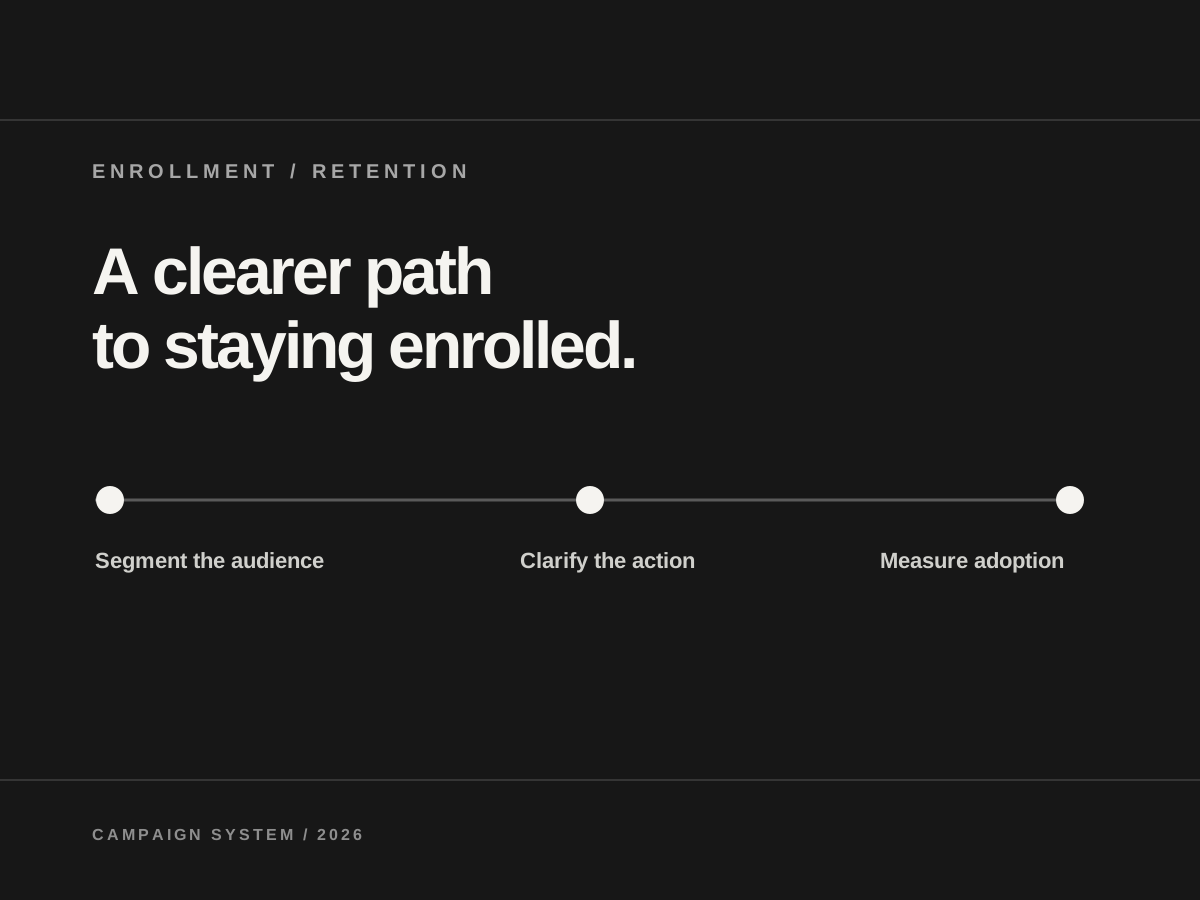
I owned the strategy-to-deadline effort end to end: planning, campaign brief, audience segmentation, message and asset development, creative approvals, partner alignment, deployment and reporting. Initial planning and communications began in May; the integrated campaign formally launched in June and ran toward the Aug. 1 decision deadline. Across the 80-day span from the first documented May 13 touch to that deadline, we paired each message with an action, suppressed students after completion and measured first agreements and payments.
My role
Strategy through execution.
- End-to-end strategy, asset development and launch
- Audience segmentation and message hierarchy
- Deadline-based email and SMS planning
- Student journey and action design
- Program reporting with financial services
The work
A connected system, not isolated deliverables.
Results
The adoption signal, in context.
80-day strategy-to-deadline window: May 13–Aug. 1, including May planning and a formal June launch. 28-day adoption comparison: Aug. 4–Sept. 1.
Student Financial Services reported these as program totals, not revenue attributable solely to marketing. Participation rose from 381 on Aug. 4 to 505 on Sept. 1, a 32.5% increase over 28 days. Of first agreements recorded through Aug. 17, 103 fell in the final three-day window around the Aug. 1 deadline, or 24.5%. At the June 26 checkpoint, 82 plans were active, $289,494 had been collected and $572,599 in payments was anticipated for July through December. That forecast was an early snapshot; the later September report recorded $3.7M received. Timing around the deadline indicates association with the campaign sequence, not isolated causation.